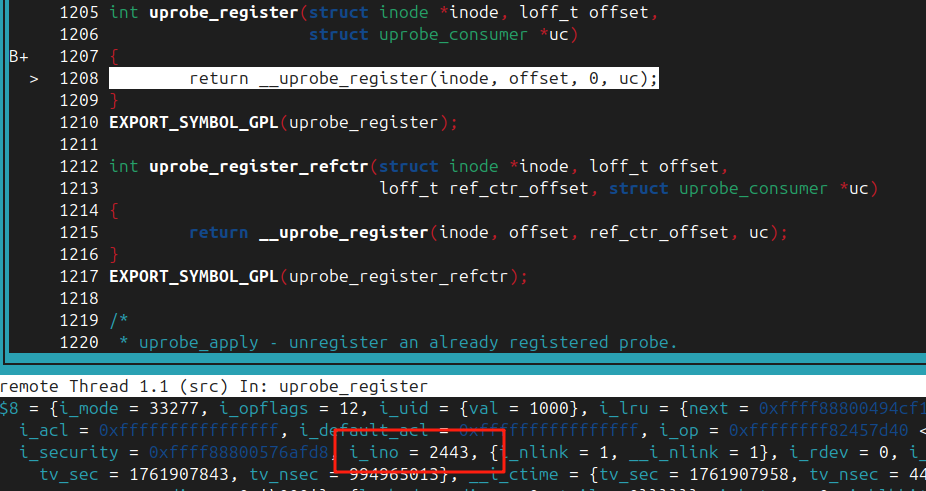
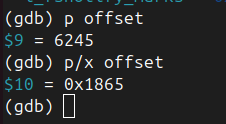
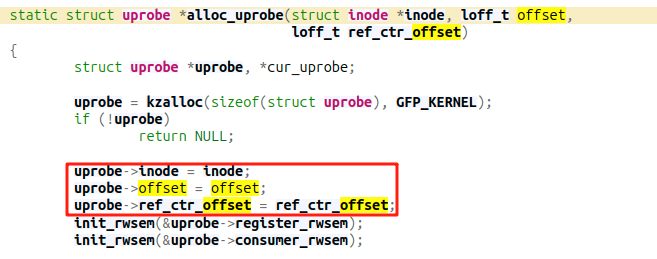
/* * __uprobe_register - register a probe * @inode: the file in which the probe has to be placed. * @offset: offset from the start of the file. * @uc: information on howto handle the probe.. * * Apart from the access refcount, __uprobe_register() takes a creation * refcount (thro alloc_uprobe) if and only if this @uprobe is getting * inserted into the rbtree (i.e first consumer for a @inode:@offset * tuple). Creation refcount stops uprobe_unregister from freeing the * @uprobe even before the register operation is complete. Creation * refcount is released when the last @uc for the @uprobe * unregisters. Caller of __uprobe_register() is required to keep @inode * (and the containing mount) referenced. * * Return errno if it cannot successully install probes * else return 0 (success) */ staticint __uprobe_register(struct inode *inode, loff_t offset, loff_t ref_ctr_offset, struct uprobe_consumer *uc) { structuprobe *uprobe; int ret;
/* Uprobe must have at least one set consumer */ if (!uc->handler && !uc->ret_handler) return -EINVAL;
/* copy_insn() uses read_mapping_page() or shmem_read_mapping_page() */ if (!inode->i_mapping->a_ops->read_folio && !shmem_mapping(inode->i_mapping)) return -EIO; /* Racy, just to catch the obvious mistakes */ if (offset > i_size_read(inode)) return -EINVAL;
/* * This ensures that copy_from_page(), copy_to_page() and * __update_ref_ctr() can't cross page boundary. */ if (!IS_ALIGNED(offset, UPROBE_SWBP_INSN_SIZE)) return -EINVAL; if (!IS_ALIGNED(ref_ctr_offset, sizeof(short))) return -EINVAL;
retry: uprobe = alloc_uprobe(inode, offset, ref_ctr_offset); if (!uprobe) return -ENOMEM; if (IS_ERR(uprobe)) return PTR_ERR(uprobe);
/* * We can race with uprobe_unregister()->delete_uprobe(). * Check uprobe_is_active() and retry if it is false. */ down_write(&uprobe->register_rwsem); ret = -EAGAIN; if (likely(uprobe_is_active(uprobe))) { consumer_add(uprobe, uc); ret = register_for_each_vma(uprobe, uc); if (ret) __uprobe_unregister(uprobe, uc); } up_write(&uprobe->register_rwsem); put_uprobe(uprobe);
if (unlikely(ret == -EAGAIN)) goto retry; return ret; }
if (is_register) { /* consult only the "caller", new consumer. */ if (consumer_filter(new, UPROBE_FILTER_REGISTER, mm)) err = install_breakpoint(uprobe, mm, vma, info->vaddr); } elseif (test_bit(MMF_HAS_UPROBES, &mm->flags)) { if (!filter_chain(uprobe, UPROBE_FILTER_UNREGISTER, mm)) err |= remove_breakpoint(uprobe, mm, info->vaddr); }
ret = prepare_uprobe(uprobe, vma->vm_file, mm, vaddr); if (ret) return ret;
/* * set MMF_HAS_UPROBES in advance for uprobe_pre_sstep_notifier(), * the task can hit this breakpoint right after __replace_page(). */ first_uprobe = !test_bit(MMF_HAS_UPROBES, &mm->flags); if (first_uprobe) set_bit(MMF_HAS_UPROBES, &mm->flags);
ret = set_swbp(&uprobe->arch, mm, vaddr); if (!ret) clear_bit(MMF_RECALC_UPROBES, &mm->flags); elseif (first_uprobe) clear_bit(MMF_HAS_UPROBES, &mm->flags);
staticintprepare_uprobe(struct uprobe *uprobe, struct file *file, struct mm_struct *mm, unsignedlong vaddr) { int ret = 0;
if (test_bit(UPROBE_COPY_INSN, &uprobe->flags)) return ret;
/* TODO: move this into _register, until then we abuse this sem. */ down_write(&uprobe->consumer_rwsem); if (test_bit(UPROBE_COPY_INSN, &uprobe->flags)) goto out;
┌──────────────────────────────┐ │ slot[0]: 指令副本 for probe A │ │ slot[1]: 指令副本 for probe B │ │ slot[2]: 指令副本 for probe C │ └──────────────────────────────┘
/* * uprobe_pre_sstep_notifier gets called from interrupt context as part of * notifier mechanism. Set TIF_UPROBE flag and indicate breakpoint hit. */ intuprobe_pre_sstep_notifier(struct pt_regs *regs) { if (!current->mm) return0;
if (!test_bit(MMF_HAS_UPROBES, ¤t->mm->flags) && (!current->utask || !current->utask->return_instances)) return0;
set_thread_flag(TIF_UPROBE); return1; }
/* * uprobe_post_sstep_notifier gets called in interrupt context as part of notifier * mechanism. Set TIF_UPROBE flag and indicate completion of singlestep. */ intuprobe_post_sstep_notifier(struct pt_regs *regs) { structuprobe_task *utask = current->utask;
if (!current->mm || !utask || !utask->active_uprobe) /* task is currently not uprobed */ return0;
/* * On breakpoint hit, breakpoint notifier sets the TIF_UPROBE flag and * allows the thread to return from interrupt. After that handle_swbp() * sets utask->active_uprobe. * * On singlestep exception, singlestep notifier sets the TIF_UPROBE flag * and allows the thread to return from interrupt. * * While returning to userspace, thread notices the TIF_UPROBE flag and calls * uprobe_notify_resume(). */ voiduprobe_notify_resume(struct pt_regs *regs) { structuprobe_task *utask;
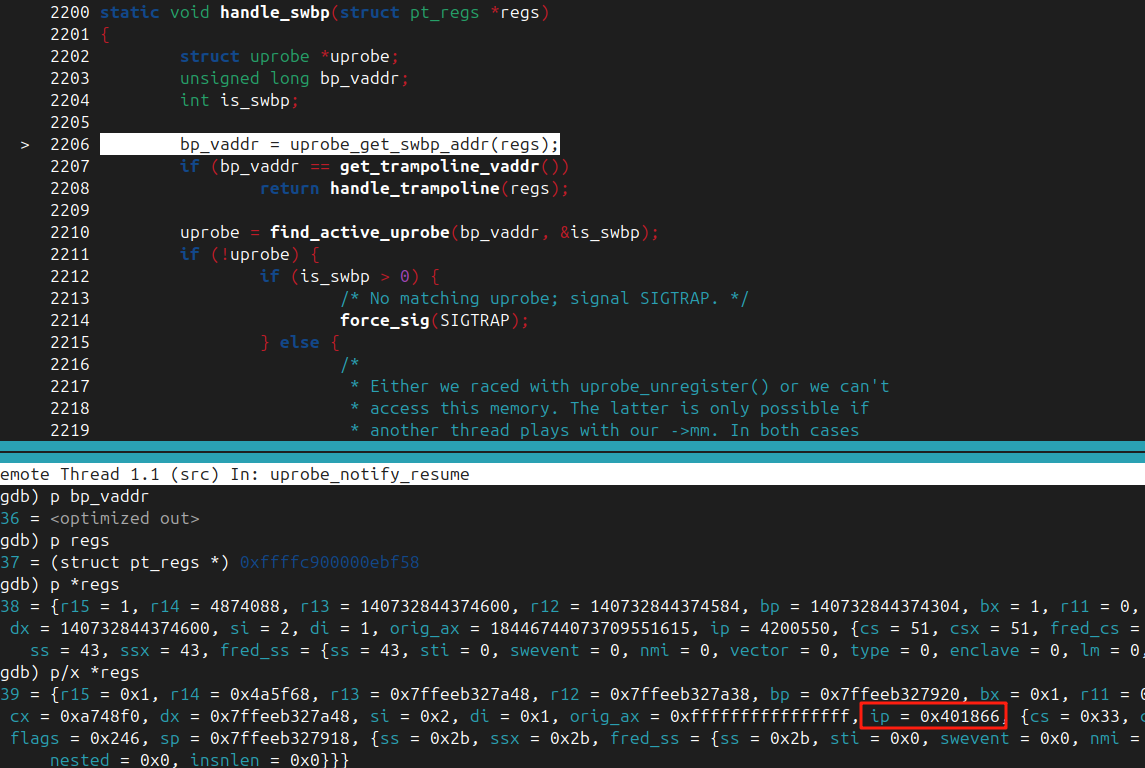
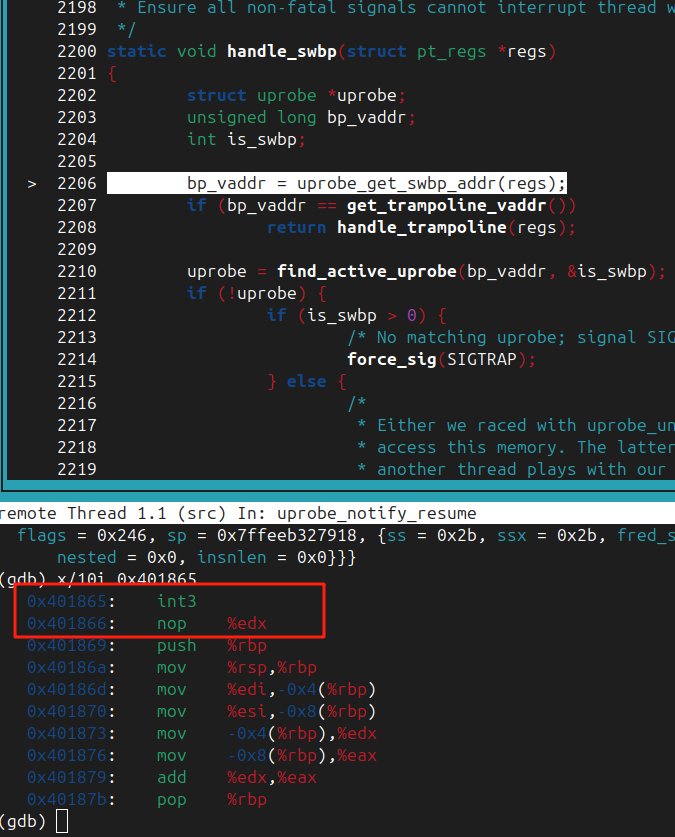
/* * Run handler and ask thread to singlestep. * Ensure all non-fatal signals cannot interrupt thread while it singlesteps. */ staticvoidhandle_swbp(struct pt_regs *regs) { structuprobe *uprobe; unsignedlong bp_vaddr; int is_swbp;
bp_vaddr = uprobe_get_swbp_addr(regs); if (bp_vaddr == get_trampoline_vaddr()) return handle_trampoline(regs);
uprobe = find_active_uprobe(bp_vaddr, &is_swbp); if (!uprobe) { if (is_swbp > 0) { /* No matching uprobe; signal SIGTRAP. */ force_sig(SIGTRAP); } else { /* * Either we raced with uprobe_unregister() or we can't * access this memory. The latter is only possible if * another thread plays with our ->mm. In both cases * we can simply restart. If this vma was unmapped we * can pretend this insn was not executed yet and get * the (correct) SIGSEGV after restart. */ instruction_pointer_set(regs, bp_vaddr); } return; }
// ============ 2 ============ // 这里修正 regs->ip 的数值指向正确的断点触发时的地址 /* change it in advance for ->handler() and restart */ instruction_pointer_set(regs, bp_vaddr);
/* * TODO: move copy_insn/etc into _register and remove this hack. * After we hit the bp, _unregister + _register can install the * new and not-yet-analyzed uprobe at the same address, restart. */ if (unlikely(!test_bit(UPROBE_COPY_INSN, &uprobe->flags))) goto out;
/* * Pairs with the smp_wmb() in prepare_uprobe(). * * Guarantees that if we see the UPROBE_COPY_INSN bit set, then * we must also see the stores to &uprobe->arch performed by the * prepare_uprobe() call. */ smp_rmb();
/* Tracing handlers use ->utask to communicate with fetch methods */ if (!get_utask()) goto out;
if (arch_uprobe_ignore(&uprobe->arch, regs)) goto out;
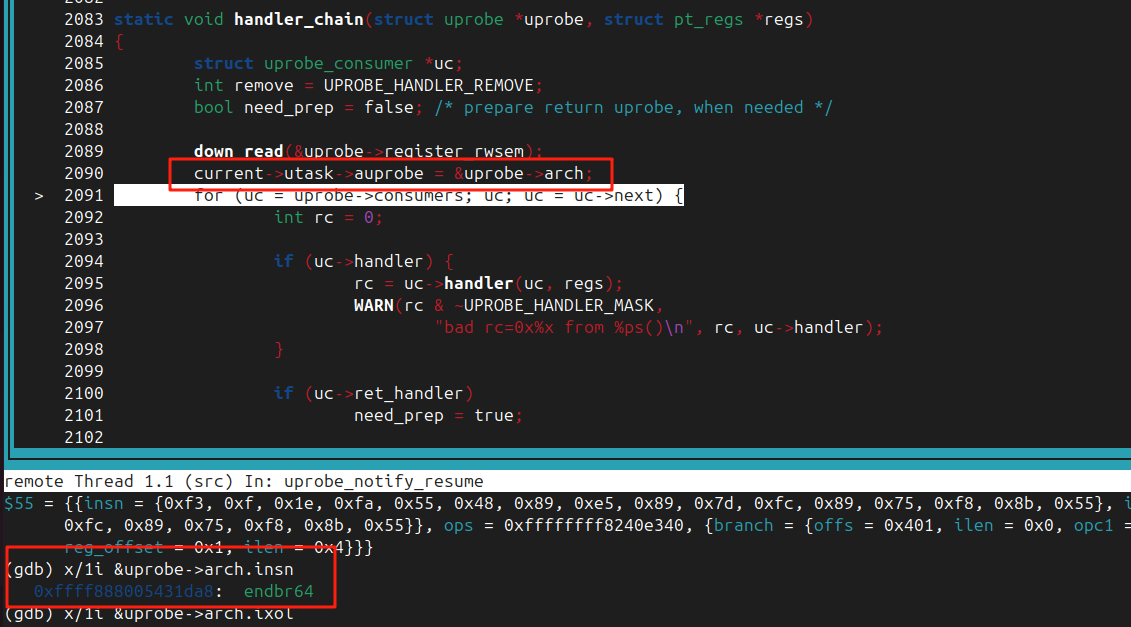
// 对于 insn 和 ixol 的区别
/*
    * The generic code assumes that it has two members of unknown type
    * owned by the arch-specific code:
    *
    * 	insn -	copy_insn() saves the original instruction here for
    *		arch_uprobe_analyze_insn().
    *
    *	ixol -	potentially modified instruction to execute out of
    *		line, copied to xol_area by xol_get_insn_slot().
    */
/* drop the entries invalidated by longjmp() */ chained = (orig_ret_vaddr == trampoline_vaddr); cleanup_return_instances(utask, chained, regs);
/* * We don't want to keep trampoline address in stack, rather keep the * original return address of first caller thru all the consequent * instances. This also makes breakpoint unwrapping easier. */ if (chained) { if (!utask->return_instances) { /* * This situation is not possible. Likely we have an * attack from user-space. */ uprobe_warn(current, "handle tail call"); goto fail; } orig_ret_vaddr = utask->return_instances->orig_ret_vaddr; }
ri = utask->return_instances; if (!ri) goto sigill;
do { /* * We should throw out the frames invalidated by longjmp(). * If this chain is valid, then the next one should be alive * or NULL; the latter case means that nobody but ri->func * could hit this trampoline on return. TODO: sigaltstack(). */ next = find_next_ret_chain(ri); valid = !next || arch_uretprobe_is_alive(next, RP_CHECK_RET, regs);
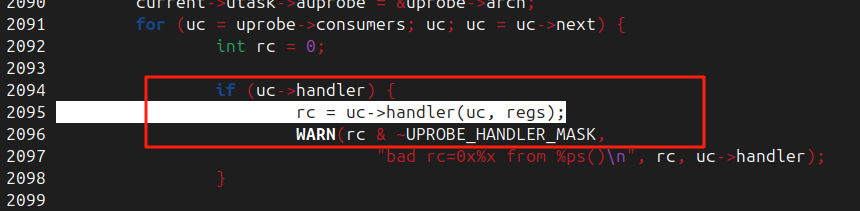
instruction_pointer_set(regs, ri->orig_ret_vaddr); do { if (valid) // 同 handler_chain 的逻辑 handle_uretprobe_chain(ri, regs); ri = free_ret_instance(ri); utask->depth--; } while (ri != next); } while (!valid);